Why isn’t the vinyl record player suitable for people who prioritize convenience?

In an era where streaming media offers “one-click playback and instant song switching,” vinyl record players have experienced a resurgence in popularity. These retro devices are often associated with “ritual,” “authentic music,” and “slow living,” appearing both romantic and sophisticated.
However, if you are someone who highly values convenience, efficiency, and low maintenance costs, you may experience a strong sense of disappointment after actually using a vinyl record player.
This is not because the vinyl record player is “bad,” but because its design philosophy is inherently in conflict with “convenience.”
In this article, we explain from multiple perspectives, including structure, usage process, maintenance costs, and time investment, why a vinyl record player is not suitable for people who prioritize convenience.
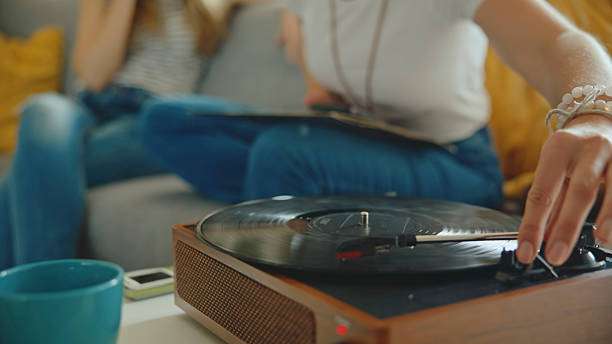
The vinyl record player was never designed to be convenient.
To understand this issue, we must first clarify one point: when
vinyl record players were invented, “convenience” was not the goal.
In the era when vinyl records became the mainstream medium:
No portable music
No instant search
No unlimited music library
Acquiring music itself requires time, preparation, and effort.
The vinyl record player almost completely retains this “pre-digital era” usage logic, which emphasizes physical contact, mechanical processes, and human intervention rather than automation.
The difference in convenience already exists from the moment you start listening to a song.
If you’re used to using a mobile phone or smart speaker, the typical process for listening to music is
Unlock → Click → Play
Using a vinyl record player, even if you just want to listen to a song, the process becomes:
Take out the record
Clean the surface of the record
Open the player
Adjust speed
Place tonearm
Waiting for the needle to drop onto the record
Flip over/Manually change film
This is not an exaggeration, but the normal usage process of a vinyl record player.
For those who value convenience, this operation will be frequently perceived as
Cumbersome
lengthy
unnecessary
The inability to skip tracks is the first major blow to user convenience.
In the streaming era, skipping the intro you don’t like and going straight to the chorus has become an unconscious action.
However, the vinyl record player does not support this logic.
To switch songs, it means:
Manually lift the tonearm
Visually assess the location of the record
Precise needle placement
This process is not only slow but also has the following problems:
risk of stylus wear
Risk of record scratches
For those who crave convenience, this “inability to skip ahead” can quickly be amplified into a burden.

Maintenance costs are the opposite of convenience.
1. Records need to be cleaned regularly.
Dust, static electricity, and fingerprints can all directly affect playback quality.
A vinyl record player does not “automatically correct” these problems.
You need to:
Cleaning brush
Antistatic tools
Reasonable storage space
2. The stylus is a consumable item.
The stylus is not for permanent use:
It must be replaced after a certain period of use.
Different recordings will cause different degrees of wear on the record.
This means that the vinyl record player is not a device that can be used immediately after purchase and requires no maintenance in the long term.
I first started using a vinyl record player for an extended period; I thought I could use it as a “background music device.”
But I quickly discovered that I needed to consciously “set aside time” for it before each playback. When my work pace quickened, I would subconsciously avoid it and choose more direct playback methods. This made me realize that the problem wasn’t with the device but with my expectations for its use.
Storage and Space: Real-world Issues Often Overlooked by Users
For those who prioritize convenience, music is usually
Cloud
Space-saving
Ready to use
vinyl record player lies the long-standing existence of physical records.
This means:
Records need to be stored vertically.
Avoid high temperature and humidity
Occupy real space
As the number of records increases, this “physical burden” becomes very noticeable.
The playback stability is not suitable for users who frequently need to interrupt their playback.
A vinyl record player is not good at:
Frequent pauses
Quickly switch scenes
Repeatedly interrupted
If your listening habits are
Listen while doing things
Could be interrupted at any time
Frequently switch tracks
Then you will clearly feel that the vinyl record player is not “matching” your rhythm.
Who is the vinyl record player truly best suited for?
Conversely, a vinyl record player is more suitable:
People who are willing to set aside time for music
People who don’t mind slow operation
People who prefer full albums to singles
People who consider “process” as part of the experience
Instead of pursuing:
High efficiency
Extremely simple operation
Multi-task parallel
FAQ:
Q1: Is a vinyl record player really much more troublesome than a digital player?
A: It is indeed significantly more troublesome in terms of operation steps, maintenance, and time investment.
Q2: Are there any “more convenient” vinyl record players?
A: There are models with a higher degree of automation, but the underlying logic remains unchanged.
Q3: Are beginners more likely to find it inconvenient?
A: Yes, beginners are usually more sensitive to the operation steps.
Q4: Are people who prioritize convenience completely unsuitable for vinyl records?
A: Not completely unsuitable, but unsuitable as a “primary mode of playback.”
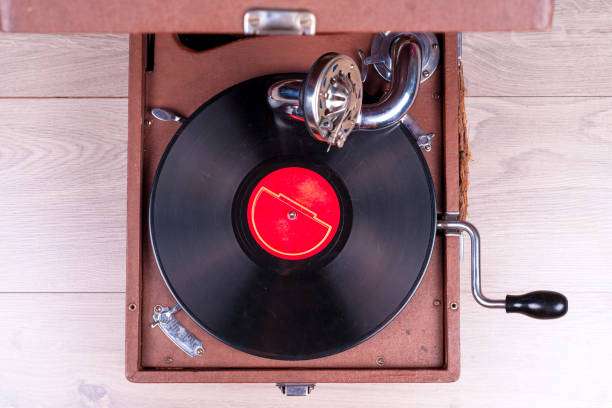
Conclusion:
Vinyl record players are not meant to replace convenience.
Their value lies in time, patience, and engagement.
If what you are pursuing is
Instant gratification
Minimal Operations
Minimum maintenance
A vinyl record player might make you feel like you’re being “slowed down.”
Before deciding whether to buy, you might want to ask yourself a question: Do you want “music anytime” or “time to make time for music”?

