Which parameters are most easily overlooked when purchasing a vinyl record player?

With the resurgence of vinyl records, more and more music lovers are paying attention to vinyl record players. Compared to digital music devices, vinyl record players not only require good sound quality but also involve mechanical structure, user experience, and daily maintenance. However, some important parameters are often overlooked during the purchasing process.
This article will delve into these details to help you choose the ideal vinyl record player and share some practical tips to elevate your music experience.

Quality of tonearm and stylus
Many people focus only on the design and brand when choosing a vinyl record player, neglecting the quality of the tonearm and cartridge. The tonearm design directly affects the trajectory of the cartridge on the record, thus impacting sound quality and record wear. If the tonearm weight is improper or resonance control is poor, even a high-performance player may experience sound distortion or skipped styluses.
I once bought a beautiful vinyl record player. The sound quality was good at first listen, but after a few weeks, I noticed the bass was muddy and the rhythm was unstable. Upon closer inspection, I discovered that insufficient tonearm support was causing resonance issues. Adjusting the tonearm weight and angle significantly improved the sound quality, making me realize that tonearm design is a crucial factor that cannot be ignored in the vinyl playback experience.
The material and type of stylus are also very important. Beginners often choose ceramic styluses, but for a more delicate tone, gold-plated or diamond-plated styluses will perform better. Choosing a stylus that suits the types of records you collect can enrich the details and layers of the music.
Turntable and motor stability
The weight, material, and balance of the turntable directly affect the smoothness of vinyl record playback. A lightweight or unbalanced turntable is prone to vibration, causing unstable record rotation speed and resulting in pitch fluctuations. The type of motor also affects the user experience: Direct-drive motors have a fast response but are relatively noisier; belt-driven motors have stable speed and low vibration but require regular belt replacement.
I once used a vinyl record player that looked high-end, but the platter was slightly off-center, resulting in noticeable rhythmic breaks when playing slow jazz. By choosing a player with a heavy aluminum platter and belt drive, the playback became much smoother, with clear and stable bass. This shows that the quality of the platter and motor is crucial.
Supported playback speeds
Vinyl record players typically support 33 1/3 RPM and 45 RPM, with some high-end models also supporting 78 RPM. Many users focus only on 33 or 45 RPM when purchasing, neglecting 78 RPM compatibility. If you collect vintage or classic records, 78 RPM support is crucial; otherwise, you won’t be able to play certain record types.
In addition, some models offer adjustable speed precision, allowing for fine-tuning of the tempo to ensure accurate playback. This is especially important for discerning music lovers, particularly when enjoying classical or jazz music.
Built-in amplifier and audio interface
Modern vinyl record players often come with built-in amplifiers or output interfaces, including RCA, USB, or Bluetooth. Novice users often overlook amplifier power and interface compatibility. If the player only has line outputs and your audio equipment only supports high-level inputs, you may need to purchase a preamplifier separately, increasing cost and complexity.
I once encountered a vinyl record player, only to find upon returning home that it lacked a built-in amplifier, limiting my monitoring to headphones and forcing me to purchase additional equipment. Later, I opted for a model with a high-quality built-in amplifier and multiple interfaces, making playback much more convenient. It also supports direct connection to computers and Bluetooth speakers, making daily use much easier.
Body material and shockproof design
Playback can affect sound quality, especially when used on wooden or tile floors. Many users focus only on the appearance and materials, neglecting shock-absorbing design. Heavy-duty bases, rubber feet, or vibration-damping designs can effectively reduce resonance, improving playback stability and sound clarity.
When choosing the material for the player’s casing, you should consider not only aesthetics but also weight and stability. Wooden, aluminum alloy, or composite material bases can increase the player’s stability, while lightweight plastics may produce micro-vibrations during high-speed rotation, affecting sound quality.

Record clips and dust covers
Although record clips and dust covers may seem like accessories, they are crucial for protecting the lifespan of records and gloves. Record clips prevent records from bouncing during high-speed spinning, ensuring stable playback; dust covers prevent dust accumulation from affecting the lifespan of the stylus and sound quality.
The player I initially bought didn’t come with a dust cover, and after a few months of use, the stylus accumulated a lot of dust, requiring frequent cleaning. Later, I switched to a model that came with a dust cover and record holder, which made playback smoother and significantly extended the lifespan of the stylus.
Ease of maintenance and upgrade
Vinyl record players require regular stylus replacement, tonearm cleaning, and balance adjustments. Some models have complex structures, high maintenance costs, and limited upgrade potential. Before purchasing, check if the stylus is replaceable, the tonearm weight is adjustable, and the anti-slip performance is adequate to ensure a good long-term user experience.
Practicality of appearance design
While an attractive design is important, ease of use is equally crucial. The logical button layout, the readability of the control panel, and the smoothness of the dust cover opening and closing all directly impact the user experience. I once purchased a visually appealing vinyl record player, only to find its operation cumbersome and its speed adjustment and switching functions unintuitive, significantly diminishing the overall user experience. A balanced approach, considering both aesthetics and practicality, is essential for achieving the best experience.
Additional features and modern connectivity
Modern vinyl record players often come equipped with USB ports, Bluetooth output, or digital recording capabilities. These features are very user-friendly for digital music enthusiasts, allowing direct recording of vinyl content to a computer or playback via Bluetooth to speakers. Don’t overlook these extra features when purchasing, as they significantly enhance ease of use.
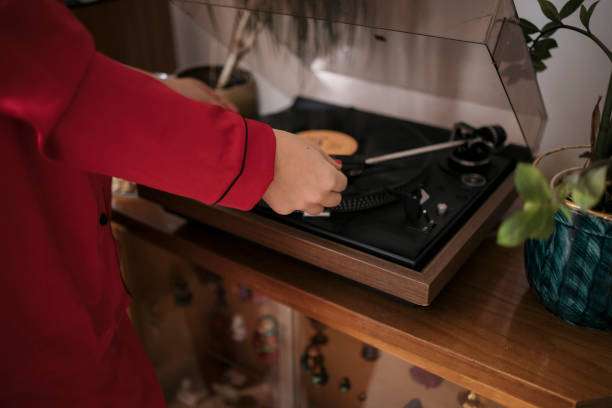
summary
When purchasing a vinyl record player, besides brand, sound quality, and appearance, the following parameters are most easily overlooked:
The materials and design of the tonearm and stylus and the stability of the platter and motor—every detail can affect the vinyl record playback experience and sound quality. Only by comprehensively considering these parameters can you select a vinyl record player that is both durable and high-performance.
If you are looking for your ideal vinyl record player, it is recommended to make a list of your requirements in advance, compare tonearms, turntables, interfaces, and ease of maintenance, and avoid the regret of “ignoring key parameters” after purchase.
vinyl record player that meets your sound quality requirements while also being durable and easy to use, so that every record in your collection can perform at its best and make your music experience even better!

