In-depth analysis: The ultimate guide to eliminating noise and crackling sounds from vinyl record players

Vinyl record players demonstrate our yearning for warm, immersive analog sound. However, the experience is undoubtedly diminished when you excitedly put down the stylus only to be met with an annoying crackling, hissing, or low hum. This irritating background noise is an inherent challenge of analog audio systems and a major deterrent for many vinyl enthusiasts.
The good news is that most vinyl record player noise is not insurmountable. These disturbances often stem from identifiable and repairable problems, ranging from tiny dust particles stuck in the record groove to complex electrical grounding faults.
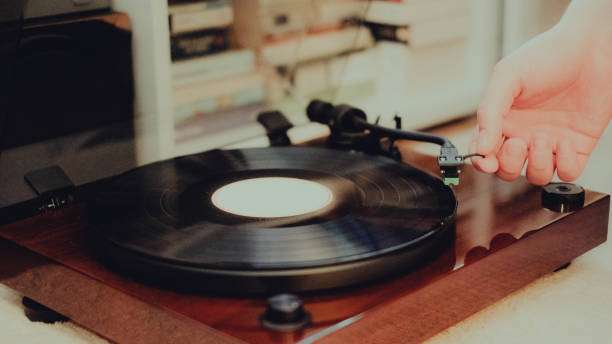
The three main culprits of sound distortion
To effectively eliminate noise, we first need to categorize the noise in vinyl record players into three main types and then address each type accordingly.
Cracking sound: 90% of the time the record is “dirty.”
The crackling sound is the most typical noise of vinyl records, sounding like someone eating popcorn next to your ear. These high-frequency crackling sounds are almost always caused by physical factors—namely, foreign objects inside the record groove.
The culprit: dust and dirt
Phenomenon: Regardless of whether the record is new or old, there will be varying degrees of crackling and hissing sounds. Dust, fingerprints, and even tiny particles in the air will be amplified by the stylus.
The culprit: Static electricity buildup
Phenomenon: Especially in dry environments, records tend to attract a lot of dust and produce a sharp crackling sound when played.
The culprit: permanent physical damage
Phenomenon: Deep scratches or manufacturing defects visible to the naked eye. This crackling sound is usually periodic and cannot be eliminated; you need to accept it as part of the “record’s personality.”
Buzzing sound: a typical electrical problem
A deep, persistent hum is another common vinyl record player noise, usually caused by 50 Hz/60 Hz power frequency interference, which is unrelated to the physical condition of the record itself.
Causes: Poor grounding, power cord and signal line being too close, or the cartridge/tonearm being interfered with by the motor’s magnetic field.
Friction/hissing sound: Adjustment or wear problem
vinyl record players This type of noise is usually associated with high-frequency distortion and harsh sounds, often pointing to problems with the stylus or tonearm settings.
Causes: Improper tracking force setting, incorrect anti-slip force, or severe wear of the stylus.
Solution: The Ultimate Techniques for Eliminating Noise from Vinyl Record Players
The following are systematic elimination techniques and maintenance steps for the three main types of noise mentioned above.
Cleanliness is key: Eliminating crackling sounds is fundamental. Up to 80% of crackling sounds can be eliminated through proper cleaning.
Use a professional tool: Before each playback, gently brush the record along its grain with a carbon fiber brush. This effectively removes surface dust and discharges static electricity (eliminating the crackling sound caused by static).
Deep cleaning: Records with heavy oil stains or fingerprints require a wet cleaning. The most effective method is to use a professional record cleaning machine, which can suck out the dirt from deep within the grooves. If the budget is limited, a professional cleaning solution can be used with a microfiber cloth for manual wet cleaning.
Proper storage: Always store records vertically and use an anti-static sleeve to prevent dust and static electricity from adhering again.
Precise calibration: Resolving distortion and some crackling sounds. Incorrect settings can force the stylus to damage the record groove, thus creating noise.
Set tracking force: Use a stylus pressure gauge to ensure that the stylus pressure is exactly as recommended by the manufacturer.
Too light: The stylus is prone to jumping out of the groove, resulting in severe distortion and crackling sounds.
vinyl record players Too heavy: Accelerates wear and tear on the stylus and record.
Calibrate the anti-slip force: The anti-slip force is used to keep the stylus centered in the groove. If improperly set, the sound will be biased to one side of the vocal tract, resulting in an unbalanced sound and high-frequency distortion. Correctly adjusting the anti-slip force is a crucial step in eliminating tone deviation and hissing.
Check the stylus condition: A dirty stylus cannot properly track the grooves, producing a lot of crackling sounds. Clean it regularly with professional stylus cleaner or magic putty. The stylus lifespan is approximately 800-1000 hours; if distortion and noise persist, consider replacing it.
Electrical Safety: Eliminating Low-Frequency Humming. Humming usually originates from grounding or interference in the system.
Check the ground wire: Ensure the ground wire on your vinyl record player is securely connected to the corresponding terminal on the preamp or power amplifier vinyl record players. Incorrect grounding is the root cause of 90% of humming noises.
Isolate power cables: Avoid tightly bundling the phono preamp’s signal cables (RCA cables) of vinyl record players with the power cables. Separate them to minimize electromagnetic interference.
Keep away from sources of interference: Keep the vinyl record player away from Wi-Fi routers, mobile phones, or any large transformers.
Advanced maintenance: Minimize noise
Finally, vinyl record players: don’t forget to perform mechanical maintenance on the vinyl record player itself.
Horizontal placement: Use a level to ensure your vinyl record player base is absolutely level. Uneven equipment is a common cause of skipping and crackling sounds.
Motor maintenance: For belt-driven vinyl record players, regular inspection and lubrication of the motor bearings can eliminate mechanical friction and vinyl record player noise generated during operation.
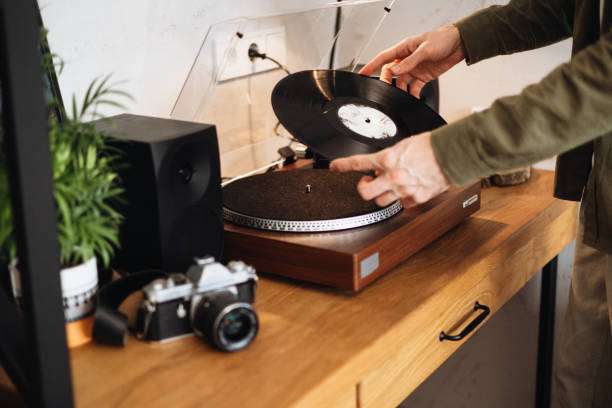
Summarize:
When you put all these noise reduction techniques into practice—from meticulous record cleaning to precise tonearm tuning and grounding—you’ll find that vinyl record player noise is significantly reduced. The charm of vinyl sound quality lies in this pursuit of detail.
Next time, when you hear the first note from a vinyl record player, you’ll hear the artist’s intent, not a dusty background noise.
So, when was the last time you gave your vinyl system a deep clean and calibration? Share your exclusive noise cancellation tips in the comments

