The sound characteristics of an aging vinyl record player : It doesn’t suddenly deteriorate, but rather gradually changes.
Many people suddenly realize one day that
the same vinyl record player doesn’t sound as good as it used to.
It’s not that it’s completely unlistenable, but rather that there’s less detail, the background isn’t as clean, the low frequencies are diffused, and the music might even feel a bit “tiring.”
This isn’t an illusion, but rather a typical sign that a vinyl record player is gradually entering its aging phase after prolonged use .
Unlike digital devices, vinyl systems are a structure that relies heavily on mechanical and physical precision. Once they age, the changes in sound are often gradual and subtle .
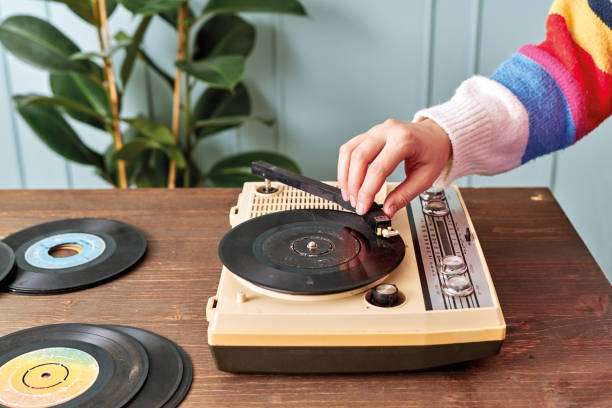
Why does the aging of a vinyl record player directly affect the sound?
a vinyl record player is essentially the result of the following components working together:
Rotating system (motor, bearings, turntable)
Mechanical transmission system (tonearm, bearings, damping)
Microscopic contact system (stylus and engraving)
Electrical signal conversion path (cartridge, circuit, contacts)
If any one of these components experiences a decrease in precision, the sound will change, and it’s difficult to simply judge whether it’s “broken” or not .
The earliest sign of aging sounds: the background is no longer “black”.
For many vinyl record players in their early stages of aging , the first change is not a decline in sound quality, but rather:
When the quiet section is played, a subtle background noise begins to appear.
The gaps between records are no longer completely clean.
The feeling of the music “floating in the air” diminished.
This is because:
Decreased lubrication condition of slewing bearings
Motor vibration isolation capability weakened
Internal mechanical resonance begins to be amplified
These problems are very minor at first and are often only noticeable on familiar records.
Mid-to-high frequency changes: details become duller, but not necessarily harsh.
As the years of use increase, many vinyl record players exhibit a very typical change:
High-frequency extension is still present, but it is no longer transparent.
The position of sibilants in female voices becomes blurred
The strings lacked a sense of “edge”.
This is usually related to the following factors:
Stylus wear leads to changes in contact pattern
The tonearm bearing damping changed
The cartridge suspension is aging, causing a slower transient response.
It is worth noting that
these kinds of changes are rarely jarring, but rather “not clear enough ,” making them easier to overlook.
Typical signs of low-frequency aging: The quantity is still there, but the control is gone.
Many people mistakenly believe that low-frequency aging means “no low frequencies,” but in reality, it is more common to have:
The low-frequency presence is still there
Diving sounds good
But the outline begins to diverge and converges slowly.
In vinyl record players , this usually originates from:
Turntable stability decreased, and rotation speed fluctuated slightly.
Changes in tonearm effective quality and cartridge matching status
The shock absorption performance of the base or foot pads deteriorates.
So you’ll feel that the music “still has depth, but it’s not solid.”
Changes in tempo: Not obvious off-key, but rather “unstable”.
A key characteristic of equipment aging is a change in rhythm .
It’s not an obvious speed error, but rather:
The end of the long note swayed slightly.
The piano and sustained notes didn’t sound stable enough.
The rhythm became loose
is especially common in belt-driven vinyl record players :
Belt aging and loss of elasticity
Motor output stability variation
Reduced efficiency of turntable inertial system
These factors all affect the overall “breathing” of the music.
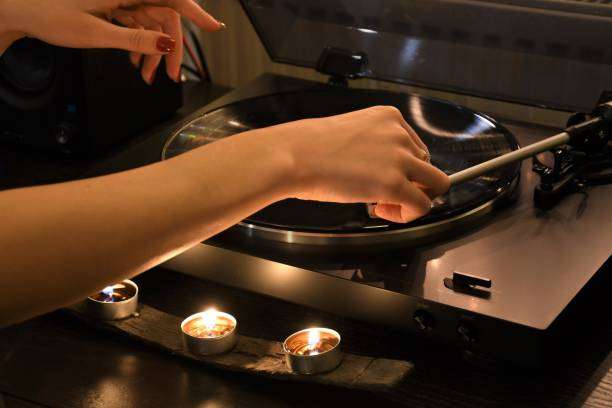
Sound image localization begins to blur
As your vinyl record player ages, you might find that:
The voice is no longer firmly fixed in the center
The boundaries between the left and right channels are not clear enough.
The sound field width seems to have shrunk.
This is often related to:
Decreased left-right consistency of tonearm bearings
Oxidation of internal signal contacts
Related to microchannel imbalance
It’s not a big problem, but it will gradually diminish the sense of immersion.
Why are many people slow to realize that their equipment is aging?
Because the aging of vinyl record players has three characteristics:
Gradualism : Only a little change each day
Adaptability : Hearing automatically “calibrates”
Misinterpretable : Easily attributed to the record or mood.
It wasn’t until I heard about a well-functioning system again that I suddenly realized the difference.
Aging does not equal obsolescence; most problems are reversible.
It is important to emphasize that the aging of
most vinyl record players does not necessarily mean that the entire device must be replaced.
Many sound changes come from:
Replaceable parts (stylus, belt)
Adjustable structure (tonearm, level, damping)
Maintainable components (bearing lubrication, contact cleaning)
If the assessment is accurate, the equipment can often be restored to a state close to its original condition.
FAQ:
Q1: How long does it typically take for a vinyl record player to develop an aged sound?
With frequent use, subtle changes may begin to appear after 3–5 years.
Q2: Does a decrease in sound quality always indicate equipment aging?
Not necessarily. It could also be due to stylus wear or changes in environmental vibrations. A comprehensive assessment is needed.
Q3: Can the sound of aging be improved through tuning?
In most cases, yes, especially for mechanical structure-related issues.
Q4: Is it necessary to replace the entire system to see a significant improvement?
Usually not, targeted maintenance is more effective.
Q5: Will aging suddenly accelerate?
If you continue to use it in an unbalanced state, it may indeed accelerate wear and tear.
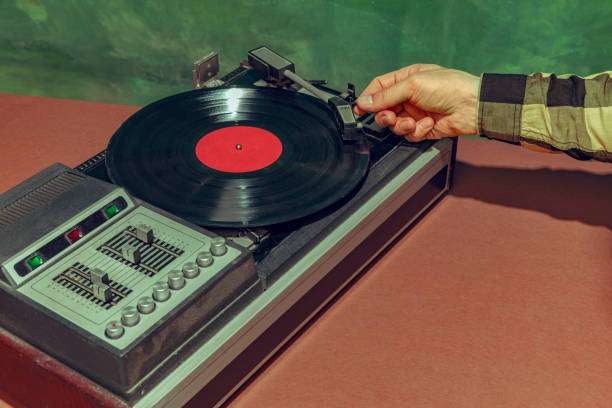
Summarize:
Unlike fast-moving consumer electronics, the aging process of
a vinyl record player is an integral part of its usage history. The important thing is not to prevent aging, but to promptly identify the signs of aging and make adjustments and maintenance at the appropriate stages.
When the system regains its balance, you will understand once again why vinyl records are worth the long-term investment.
Welcome to our curated selection of vinyl record players and maintenance products to help you get the sound back to its rightful place.
Related Posts

A vinyl record player determines sound quality and stylus lifespan.
-
Posted by
 Carter Eleanor
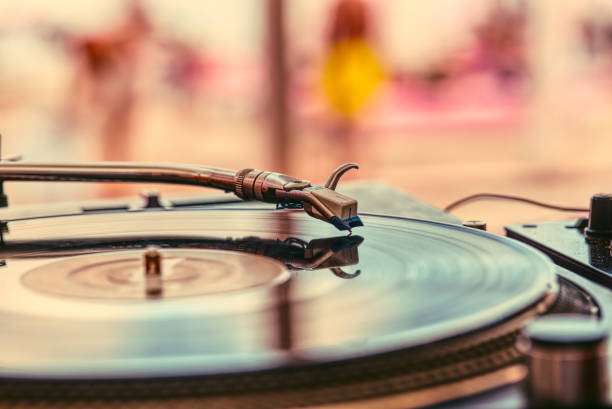
Does a vinyl record player affect sound quality? From principle to actual impact, let’s explain it all.
-
Posted by
Carter Eleanor
How can I choose the right rotation speed for my vinyl record player?
-
Posted by
Carter Eleanor
vinyl record players need frequent adjustments?
-
Posted by
Carter Eleanor
Does a vinyl record player have an impact? How can I choose the right rotation speed for my device?
-
Posted by
Carter Eleanor

