Does a vinyl record player have an impact? How can I choose the right rotation speed for my device?
When purchasing a vinyl record player, many people are attracted by its appearance, brand, or price but often overlook a seemingly basic yet extremely crucial factor—speed.
In fact, the rotation speed of a vinyl record player not only directly affects the rhythm and pitch of the music but also determines whether you can play your record collection completely and accurately.
When I first encountered vinyl records, I was also unaware of the concept of rotation speed and mistakenly thought that “as long as it can rotate, it’s fine.” As a result, the same record sounded completely different on different devices. This experience made me truly realize that rotation speed is far more important than I had imagined.
So, does the rotation speed of a vinyl record player actually have an impact? What kinds of records are suitable for different rotation speeds? And how should beginners choose? This article will explain it all clearly.
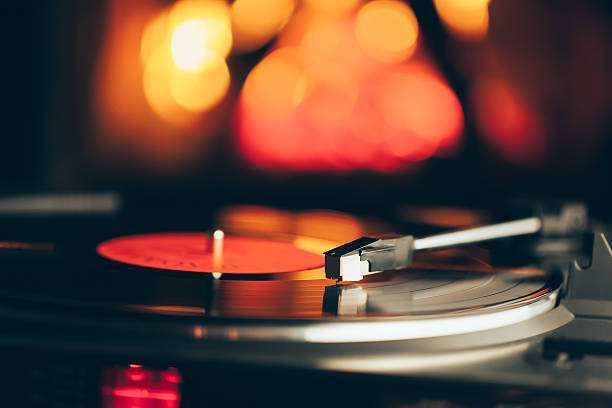
What is the vinyl record player rotation speed?
Simply put, the rotation speed of a vinyl record player refers to the number of revolutions per minute (RPM) of the turntable.
Currently, most mainstream vinyl record players support the following three speeds:
33⅓ RPM
45 RPM
78 RPM (less common)
Each speed is designed for a specific type of vinyl record and cannot be used interchangeably.
of a vinyl record player really affect sound quality?
The answer is yes, and the impact is very significant.
1. Mismatched rotation speeds will directly alter the music itself.
If you play a record at the wrong vinyl record player speed, the following will happen:
The music tempo changes from fast to slow
The human voice is distorted at a high pitch, sounding either “cartoonish” or “overly deep.”
The mood and atmosphere were completely ruined.
I once mistakenly played an old rock single at 45 RPM at 33⅓ RPM. The whole song sounded sluggish and strange until I switched to the correct RPM and realized that the song actually had a strong rhythm.
2. Prolonged use of incorrect speeds can also damage the record.
Many people don’t know that using the wrong vinyl record player speed over a long period of time is not just a matter of “sounding bad”; it can also:
Increased abnormal friction between the stylus and the record groove
Accelerate record wear
Affecting the lifespan of the stylus
Therefore, the rotation speed is not only a matter of sound quality but also a matter of record protection.
Differences and applicable scenarios of three common speeds
1. 33⅓ RPM: The most common and mainstream method
Commonly found on LPs (12-inch).
Suitable for albums, symphonies, and concept records
Long playback time, balanced and stable sound quality
If you collect modern vinyl records or reissues, 33⅓ RPM is the most commonly used vinyl record player speed.
2. 45 RPM: Better sound quality, but shorter duration.
Commonly found in 7-inch singles
Wider sound groove, better detail reproduction
Mostly used for rock, jazz, and audiophile-grade film compression.
When I upgraded my player later, I seriously compared 33⅓ and 45 RPM for the first time. The dynamics and clarity of the same song were indeed more prominent at 45 RPM, which is why many audiophiles pay special attention to this kind of speed.
3. 78 RPM: For old records only
Mainly used for early shellac records
Special stylus required
Not suitable for ordinary modern records
If you don’t collect old records, you usually don’t need to specifically choose an instrument for 78 RPM.
How to select the appropriate
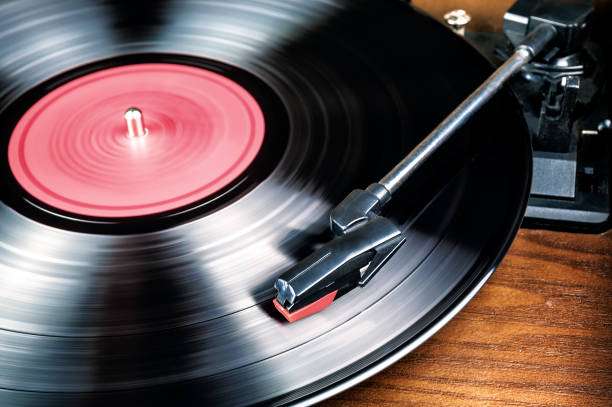
rate vinyl record player speed based on your needs?
1. First, consider what you are “listening to.”
This is the most important step:
Primarily modern albums → Supports at least 33⅓ RPM
Available with numerous singles or audiophile versions → Requires 33⅓ + 45 RPM
Collecting old records → Only considering 78 RPM
For most users, the vinyl record player’s two-speed configuration is more than sufficient.
2. Manual switching vs. automatic switching
Manual switching: Simple structure and affordable price, but requires manual adjustment.
Automatic switching: Easy to operate, suitable for beginners.
Personally, I prefer the automatic switching design, especially during daily listening, as it eliminates the need to repeatedly check settings, making the experience more relaxing.
3. Speed stability is more important than “multiple gears.”
Some entry-level players claim to support multiple vinyl record player speeds, but:
Large speed fluctuations
Unstable hearing
Playing for extended periods can cause the speed to deviate.
When making a selection, be sure to focus on speed stability (wow & flutter), not just the number of parameters.
Common misconceptions about engine speed
Myth 1: Faster rotation always means better sound quality.
No. It’s based on the premise that the record itself was designed for that speed.
Myth 2: All vinyl record players have the same rotation speed.
Different brands and different drive methods result in significant differences in the control of speed stability.
Myth 3: Beginners don’t need to pay attention to engine speed.
On the contrary, beginners who ignore the speed at the beginning are most likely to be “disappointed” with vinyl records.
FAQ:
Q1: If I only buy one machine, what speed should it support at least?
A: It is recommended to support at least 33⅓ RPM, which is the most basic and common vinyl record player speed.
Q2: Is a 45 RPM record always better than a 33⅓ record?
A: Not necessarily, but at the same production level, 45 RPM usually presents more details.
Q3: Can I adjust the speed myself if it’s inaccurate?
A: Some high-end or semi-automatic models support fine-tuning, but entry-level models usually cannot be precisely calibrated.
Summary of experience
Through long-term use, I’ve found that what truly impacts the listening experience isn’t fancy features but rather the stable and accurate rotation speed of the vinyl record player.
When the rotation speed is correct and stable, you can clearly feel that the rhythm of the music is “standing firm,” the vocals are natural, and the instruments are clearly positioned; only then can that analog sound truly be realized.
This is why many experienced players always prioritize the RPM control system when upgrading.
Summarize:
If you’re looking for a high-quality vinyl record player with stable rotation speeds and support for 33⅓ / 45 RPM, check out our selection of models.
Whether you’re a beginner or looking to upgrade your listening experience, these players will faithfully reproduce the music with every rotation.
A vinyl record player suits you so that the rotation speed is no longer a hidden weakness in sound quality.
Related Posts
A vinyl record player determines sound quality and stylus lifespan.
-
Posted by
 Carter Eleanor
The sound characteristics of an aging vinyl record player : It doesn’t suddenly deteriorate, but rather gradually changes.
-
Posted by
Carter Eleanor
Does a vinyl record player affect sound quality? From principle to actual impact, let’s explain it all.
-
Posted by
Carter Eleanor
How can I choose the right rotation speed for my vinyl record player?
-
Posted by
Carter Eleanor
vinyl record players need frequent adjustments?
-
Posted by
Carter Eleanor

