How often should the vinyl record player’s belt be replaced?

of a vinyl record player is largely due to one of its core components—the belt. The belt not only determines the accuracy of the turntable’s rotation speed but also affects the control of platter vibration, the finesse of the music, and the stability of the listening experience. Therefore, many users encounter the question: how often should the vinyl record player belt be replaced?
Although this is a simple question, the answer cannot be summarized in a single sentence, as the lifespan of a belt is related to its usage, environment, material, and maintenance methods. This article will provide an in-depth analysis from a professional perspective on the aging principles of belts, replacement cycles under different usage habits, and how to determine whether a belt needs to be replaced.

Why does the vinyl record player belt age?
Vinyl record player straps are typically made of rubber, silicone, or composite materials. While they offer some elasticity and durability, they will still gradually age over time. This aging primarily stems from the following factors:
1. Natural aging of rubber materials
Whether used or not, rubber will harden, loosen, and lose its elasticity over time. This is a physical property that cannot be completely avoided.
2. Prolonged stretching leads to fatigue.
When a belt is wound between the motor and the turntable and remains stretched for an extended period, it can cause:
Decreased elasticity
Stretching
Rotational instability
Turntables used daily, in particular, age faster.
3. Effects of temperature and humidity
Belts are particularly susceptible to damage from high temperatures and humidity. Humidity softens the rubber, while high temperatures accelerate oxidation.
4. Dust buildup affects friction.
Belt drives rely on friction. If the belt gets dusty or oily, insufficient friction will cause slippage.
These factors combined cause a decline in belt performance, affecting the turntable’s sound quality.
How often should the vinyl record player belt be replaced?
If you want a standard reference answer, you can look at the following ranges.
1. For normal use: Replace every 2–3 years (most common).
Most users listen to vinyl records a few times a week, at this frequency:
Natural aging of rubber
Elasticity gradually decreases
The belt stretches slightly
Typically, the speed will start to become slightly unstable after about 2–3 years, which is the best time to replace the belt.
2. High-frequency use: Replace every 1–2 years.
For users who listen to vinyl records every day and play them repeatedly for extended periods, the continuous stretching of the belt leads to faster fatigue.
If you listen in this way, the following is recommended:
Check once a year
Replace proactively every 1–2 years.
3. Low-frequency use: Replace every 3–5 years.
If you only listen to it once a month, the belt won’t run often, but it will still age.
In this situation, the rate of natural oxidation of the rubber has a greater impact than wear; therefore,
The inspection began approximately 3 years ago.
It is recommended to replace it every 5 years at most.
Even if it doesn’t look broken, an aging belt can still affect the sound and speed.
The impact of the usage environment on lifespan: Which one are you?
Belt lifespan is also closely related to environmental factors. Please check your own situation:
1. Environments with temperatures above 28°C
The belt ages significantly faster because rubber oxidizes more easily at high temperatures.
2. Environments with humidity above 70%
Moisture will cause rubber to soften, attract dust, and wear out faster.
3. Placement location in direct sunlight
Ultraviolet rays accelerate rubber aging, causing belts to turn white and crack.
4. Near speakers and in areas with a lot of vibration.
Micro-vibrations cause the belt to be under continuous stress, making it easier for it to lengthen.
5. Places with a lot of cooking fumes in the air (near the kitchen)
Grease can significantly reduce belt friction, causing slippage.
If your vinyl record player is in one of the above conditions, its lifespan will typically be shorter than the standard cycle, requiring more frequent checks.
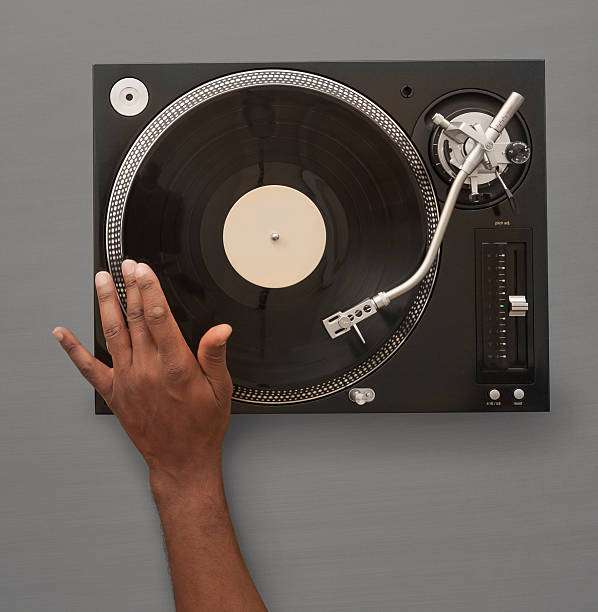
your vinyl record player belt needs replacing
Instead of memorizing years, it’s better to understand “body language.” Belts usually give very obvious signs of aging.
1. Unstable rotation speed
The record sounds like it’s going fast and slow, especially the piano, string, or instrumental tracks, which are particularly easy to feel.
2. Low frequencies become loose.
A slipping belt will cause low frequencies to lose their cohesion, making the sound weak and lifeless.
3. High frequencies are not clear enough.
Although vinyl records themselves have a relatively soft high-frequency response, this softness comes from mechanical distortion rather than an analog sound.
4. The turntable spins noticeably slower.
Starting the turntable takes longer than before, and sometimes it even needs to be shaken before it starts spinning.
5. The belt appears to have lengthened.
When the belt was removed and laid flat, it was noticeably longer and looser than it originally was.
6. Powdering or cracking appears on the edge of the belt.
This is a typical phenomenon of rubber oxidation.
7. The belt has turned grayish or whitish.
Caused by ultraviolet radiation and oxidation.
8. A “friction noise” can be heard even when no record is playing.
Belt misalignment or deformation leads to malfunction.
If two or three of these symptoms appear, it means the belt has reached the “it should be replaced” stage.
What habits can significantly shorten the lifespan of a belt?
Understanding these things can help extend lifespan.
1. Leaving the device on for an extended period of time
Some users forget to turn off the vinyl record player or let the turntable spin freely after listening, which causes the belt to be under stress for a long time.
2. Frequently push the turntable by hand.
This can cause uneven stress on the belt, leading to deformation and slippage.
3. Place the record player next to the speaker.
Vibration transmission will continuously affect the belt tension.
4. Clean the record while playing vinyl.
This will increase the load and cause additional wear on the belt.
Protecting belts is simple: reducing unnecessary stretching and vibration is the best maintenance.
How to extend the lifespan of the vinyl record player belt?
While aging is inevitable, you can slow it down.
1. Clean the belt every 2–3 months.
use:
Alcohol-free wipes
Or slightly damp cotton cloth
Simply wipe away the oil and dust.
2. Keep the area around the vinyl record player dry.
Humidity should ideally be maintained between 50% and 60%.
3. Loosen the belt when not playing (the belt can be removed on some machines).
If your turntable design allows for belt removal, this can significantly extend its lifespan.
4. Avoid placing the vinyl record player near windows or in strong light.
Avoid direct exposure of the belt to ultraviolet rays.
5. Check belt tension regularly.
Check every six months to see if it has become loose or long.
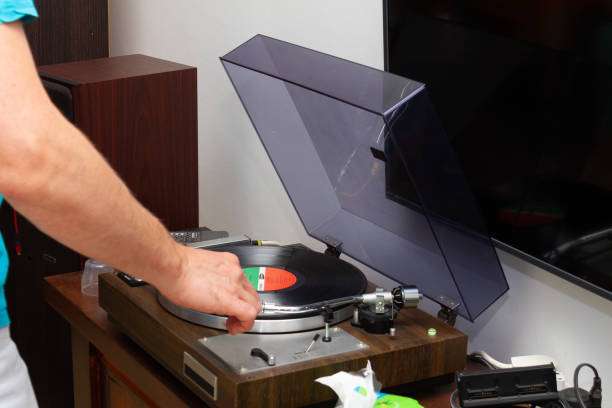
Summarize:
If you just want a concise conclusion:
For regular users: Replace every 2-3 years
Heavy users: Replace every 1-2 years
Low-frequency users: Replace every 3–5 years
However, the actual situation depends more on your usage environment and listening habits.
A properly maintained belt in an ideal environment, with regular cleaning, can easily last for more than 4 years.
However, if the environment is humid and the belt is used frequently, it may need to be replaced after 1 year.
Remember: Don’t wait until the belt breaks to replace it; replace it when its performance starts to decline.
The real purpose of replacing the belt is to ensure accurate turntable rotation speed, allowing every vinyl record to maintain its ideal sound quality.
Do you need to replace your vinyl record player? Click to view our curated selection of products.

