Does a vinyl record player need to warm up? A comprehensive analysis.

—takingFor many vinyl record enthusiasts, the allure of a vinyl record player comes not only from the warm texture of analog sound but also from the ritualistic aspect of playing it – taking out the record, wiping away the dust, and putting down the stylus all add emotion and warmth to the music.
, doesBut a common question is: Does a vinyl record player need to be warmed up? If so, why? And what happens if it’s not warmed up?
When I first started playing vinyl records, I also wondered about this. Back then, I would turn it on and play immediately, and the sound always seemed a bit harsh for the first few minutes. Later, as I gradually learned about the equipment’s structure, I discovered that vinyl record players do indeed need a certain “warm-up time,” and different components have different warm-up requirements. This change, though not dramatic, is noticeable.
Below, we will thoroughly explain the warm-up issue of the vinyl record player, from its principles and equipment structure to the actual listening experience.
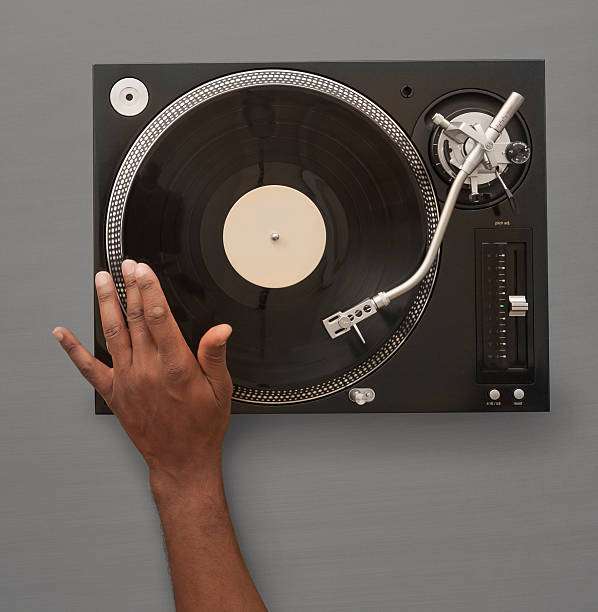
Why does a vinyl record player need to warm up?
Vinyl record players require warm-up primarily because they contain multiple analog components, and analog devices often need a short period to “get into character” before reaching a stable operating state.
The components that typically require warm-up include
1. The turntable motor reaches a stable speed.
A vinyl record player (33 1/3 or 45 RPM) may seem simple, but it actually requires very stable control.
When first turned on:
The motor speed may be slightly higher or lower.
The lubricating oil inside the slewing bearing did not flow completely.
It takes several seconds to tens of seconds for the turntable to fully stabilize due to inertia.
The more stable the rotation speed, the more accurate the rhythm, sound image, and pitch of the music.
2. The tonearm mechanism has reached its optimal balance.
Tonearms typically rely on mechanical structures to maintain balance and pressure, for example:
Cherry cadence pressure
Anti-Skating
bearing friction condition
When the equipment is first turned on, these mechanical structures may not be in a completely “loose” state yet, and it takes some time for the components to reach the optimal balance.
3. Vinyl record player cartridges need time to stabilize.
The magnets, coils, and suspension structure inside the cartridge are themselves sensitive to temperature.
This effect is subtle, but it does exist:
The suspension rubber will gradually soften due to temperature and vibration.
The coil operates more stably after the temperature rises.
Track-finding capability slightly improved
Many experienced players will tell you:
“After the cartridge warms up, the sound becomes smoother and softer.”
I noticed this more clearly when using the MC cartridge in winter; the sound was slightly “tight” when I first turned it on, but the soundstage became wider after a few minutes.
4. The phono amplifier (preamp) needs to be warmed up.
If you use:
Built-in phono stage
External phono preamp
Vacuum tube preamp
Analog power amplifier
These devices generally require preheating.
Vacuum tube devices, in particular, may need to be preheated for 10–20 minutes to reach their optimal performance.
Once the vacuum tube has been heated and stabilized, the sound will change from sharp to soft and from tight to full.
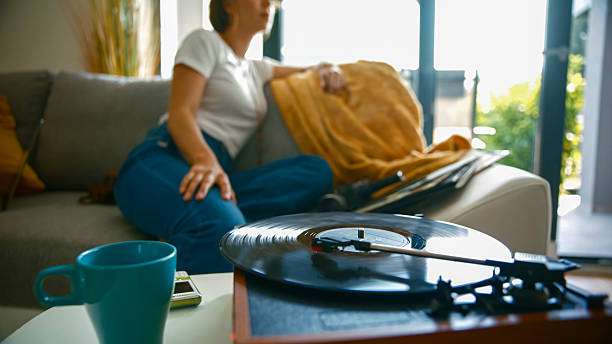
What are the consequences of not preheating a vinyl record player?
In most cases, not preheating will not cause damage, but it will affect the sound quality.
1. The sound may not be stable enough.
Sound field contraction
The midrange is slightly hard.
The low frequencies lack looseness and elasticity.
These were most noticeable in the first few minutes.
2. Slight fluctuations in rotation speed cause slight changes in pitch.
Although the value is very small, it can be heard in high-precision music such as piano, violin, and female vocals.
3. The cartridge’s initial tracking ability is poor.
Possible occurrences:
High-frequency slightly sand
The S sound (dental sound) is more prominent.
Slight compression occurs in some dynamic segments.
If you’re playing a beloved collection of records, you’ll naturally want it to sound its best.
different types of vinyl record players to warm up?
Preheating time varies depending on the equipment structure. The following is a general reference:
1. Belt Drive
Preheating time: 2–5 minutes.
Reason: The belt needs time to reach stable tension, and the motor vibration also needs to be balanced.
2. Direct Drive
Warm-up time: 1–3 minutes.
Direct drive is more stable, but the speed system still needs a short time to enter the optimal control state.
3. Equipment containing a tube phono stage
Preheating time: 10–20 minutes.
Vacuum tubes heat up the slowest, but the improvement is the most noticeable.
4. MC cartridge (dynamic type)
Warm-up time: 5–10 minutes.
The suspension structure and coil temperature will become softer after they stabilize.
5. Purely mechanical tonearm system
Preheating time: 3–5 minutes
, mainly to achieve optimal mechanical friction and balance.
How to properly warm up a vinyl record player?
Preheating doesn’t mean letting the equipment idle for five minutes. Here’s a more scientific approach:
1. Let the turntable spin idle for 30 seconds.
Allow the motor, belt, and bearings to reach a stable state.
2. Play a relaxing song for 2–3 minutes.
For example, slow-tempo jazz, acoustic, and light music
Allow the cartridge, suspension, and tonearm mechanisms to adapt to dynamics.
3. If you are using a vacuum tube device, wait an additional 10 minutes.
Once the vacuum tubes are stabilized, the overall sound performance will be more consistent.
4. Adjust the volume to allow your ears to adjust to the system.
This is not just about warming up the equipment but also about “warming up” the listening experience.
I often play a familiar and relaxing song before listening to a formal album, such as Bill Evans’ “Waltz for Debby.” This allows the equipment to warm up and also puts me into a listening state, so I can naturally immerse myself in the music every time.
the Vinyl Record Player system needs to warm up
To make this clearer, we have summarized the reasons as follows:
| part | Does it need to be preheated? | reason |
| turntable motor | need | stable speed |
| belt | need | Achieving stable tension |
| tonearm | Mild need | Mechanical balance |
| Cherry caddy | Clearly needed | Suspension and coil stabilization |
| Phono amplifiers (especially tube phono stage) | Strong need | The sound is softer and more natural. |
| power amplifier | Usually required | Analog circuit stability |
Overall, for vinyl record players, which are analog devices, warming up is not only necessary but also significantly improves the overall listening experience.
Here are my personal habits when using a vinyl record player, which you can refer to:
After powering on, let the turntable spin idle for about 30 seconds.
Play the first, less “picky” song as a warm-up.
If using a tube phono stage, preheat for an additional 10 minutes.
Formal entry into the album I want to listen to carefully
This process ensures that the sound is always at its best, which is very satisfying.
In conclusion:
It’s necessary, but not an exaggeration.
Warming up not only allows the platter, tonearm, and cartridge to reach a stable state but also enables the phono preamp and power amplifier to perform at their best, resulting in a warmer, more detailed, and more stable sound.
If you’re looking for a natural, spacious feel to music and the allure of vinyl records, this pre-heating session is definitely worthwhile.
vinyl record player for your system and start every listening session in “perfect condition”!

