Are vinyl record players susceptible to moisture? You may be underestimating the impact of humidity.

For many music lovers, a vinyl record player is not just a playback device but a symbol of a lifestyle. However, in daily use, many people overlook a crucial issue: Is a vinyl record player susceptible to moisture? Especially during the rainy season, in coastal areas, or in spaces where air conditioning is not used for extended periods, humidity can often become a hidden killer affecting sound quality and lifespan.
I first became truly aware of the humidity issue during a summer of continuous rain. My vinyl record player looked perfectly fine, but there was a faint static noise during playback, and the tonearm movement became less smooth. I later discovered that the ambient humidity had been subtly affecting the equipment.
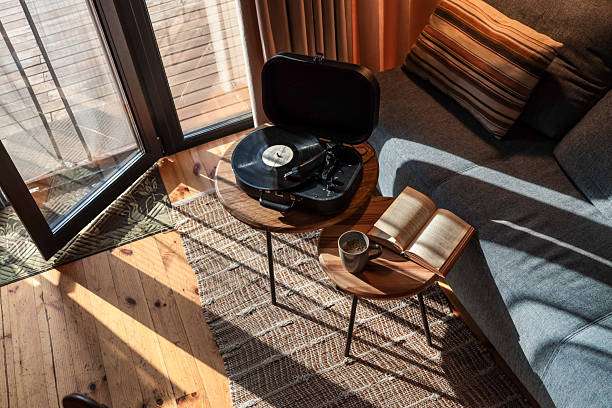
Are vinyl record players really susceptible to moisture?
The answer is yes, and it’s more frightening than many people imagine.
A vinyl record player is a device that relies heavily on the coordinated operation of mechanical structures and electronic components. From the tonearm and turntable spindle to the motor and internal circuit boards, everything is highly sensitive to ambient humidity. Prolonged exposure to a humid environment often doesn’t cause immediate problems but rather accumulates slowly, eventually impacting the user experience by the time you notice it.
Many people mistakenly believe that “as long as water doesn’t get in, it’s fine,” but in reality, high humidity itself is enough to damage vinyl record players.
What effects does a humid environment have on vinyl record players?
1. Metal parts are prone to oxidation and rust.
A vinyl record player contains a large number of metal components, such as tonearm bearings, spindles, screws, and internal shielding. These components are highly susceptible to oxidation in high-humidity environments.
I once discovered slight rust on the spindle while cleaning the tonearm; the device was less than two years old at the time. Later, after comparing the environmental conditions, I realized that the persistently high humidity was the real cause.
2. Decreased tonearm sensitivity affects tracking.
The tonearm is an extremely delicate part of a vinyl record player; even a slight change in resistance can affect the stability of the stylus’s tracking. Humid air can degrade the performance of the lubricant and even make it easier for tiny dust particles to adhere.
In actual use, you might feel:
The tonearm did not fall smoothly.
Some paragraphs are prone to skipping.
Sound details become blurred
These problems are often not caused by damage to the stylus itself, but rather by the long-term effects of environmental humidity.
3. Moisture in the internal circuitry can cause noise or instability.
Modern vinyl record players include a preamplifier, power supply module, or control circuitry. High-humidity environments can cause circuit boards to absorb moisture, which can range from minor issues like background noise to more serious problems like short circuits or component aging.
I didn’t turn on the dehumidifier for several weeks during the rainy season, and one day when I played it, I could clearly hear an increase in background noise. The problem gradually disappeared after I moved the device to a dry environment and used it in conjunction with the dehumidifier.
4. Vinyl records themselves can also warp if exposed to moisture.
While this article focuses on vinyl record players, it’s important to remember that records and players are a system. Records are prone to slight warping when exposed to moisture, which in turn increases the strain on the tonearm and stylus, indirectly affecting the player’s performance.
What environments are most likely to cause vinyl record players to get damp?
The following use cases carry particularly high risks:
Dehumidifiers are not used for extended periods during the rainy season.
Coastal cities or high humidity areas
Basement, storage room, near balcony
Location near windows, bathroom or kitchen
The machine has not been turned on for a long time, and no moisture-proofing measures have been taken.
Many people treat vinyl record players as “decorative devices,” leaving them unused and untouched. However, in reality, they are more susceptible to moisture damage when left unused.
How can I tell if my vinyl record player has gotten damp?
You can observe the following details:
Increased noise during playback
The dynamic range of the sound decreases, and the high frequencies become duller.
The tonearm is not as flexible as before.
The turntable starts up slowly
Dark spots or rust spots on metal parts
I myself only realized the environmental problem when I noticed subtle changes while cleaning the equipment. If we waited until there were obvious malfunctions before addressing them, the costs and risks would be much higher.
How to effectively prevent vinyl record players from getting damp?
1. Controlling ambient humidity is key.
Ideally, the ambient humidity for using a vinyl record player should be maintained between 40% and 55%.
This can be achieved by:
dehumidifier
Air conditioner dehumidification mode
Real-time monitoring of electronic humidity meter
I now place a small hygrometer next to the equipment, and I immediately adjust the environment if the reading is abnormal.
2. Arrange the placement appropriately.
Avoid placing the vinyl record player in:
By the window
ground
corner
Damp and poorly ventilated areas
Elevating equipment and keeping it away from water sources are very effective physical methods of moisture prevention.
3. Use a dust cover or moisture cover.
Dust covers not only prevent dust from entering but also reduce the direct adhesion of moisture to the equipment surface.
If you live in an area with high humidity, you might even consider using a dehumidifier or desiccant.
4. Regular power-on and maintenance
If left unused for a long time, it will be more prone to moisture absorption. Recommendation:
Power on at least once a week
Regularly check the tonearm and spindle.
Replace aged lubricating oil
I later developed the habit of “letting it spin for a while even if I’m not listening attentively,” and the effect was very obvious.
FAQ:
Q1: Will short-term exposure to moisture immediately damage a vinyl record player?
A: It usually won’t damage it immediately, but it will accelerate the aging process, and the risk is higher in the long run.
Q2: Is it safer to keep it off?
A: Not necessarily. Prolonged periods of inactivity without ventilation can actually make it more susceptible to moisture.
Q3: Do I need to buy a dehumidifying cabinet?
A: If you live in a high-humidity area or your equipment is valuable, a dehumidifying cabinet is a worthwhile investment.
Q4: Can the dehumidifier be placed directly next to the player?
A: Yes, but be careful not to let it touch the surface of the device to avoid powder leakage.
Q5: Will moisture on records affect the player?
A: Yes. Deformed records increase the burden on the tonearm and stylus, indirectly affecting the lifespan of a vinyl record player.
Conclusion
Vinyl record players are indeed susceptible to moisture, and this effect is often slow, insidious, and irreversible. Compared to the expensive costs of repair and replacement, taking preventative moisture measures in advance is almost a risk-free, high-return option.
If you’ve already invested time and budget in sound quality, styluses, and records, then don’t overlook the crucial factor of ambient humidity. Creating a stable, dry environment for your vinyl record player is the most basic respect you can show to your music.
For a vinyl record player with a more robust protective design suitable for long-term use, or related moisture-proof accessories, now is the perfect time to upgrade and optimize. Ensure the purest sound quality for every playback.

