
In the era of digital music dominance, we can click on a song or swipe through a melody almost anytime, anywhere. Music has become as tangible as air, yet it has also quietly lost its weight, texture, and warmth. But when a vinyl record player slowly turns, the sounds from the past, from craftsmanship, from touch, and from analog waveforms will suddenly make you realize music can actually be so “warm.”
More and more people are embracing vinyl records again, not just for collecting, but to rediscover a long-lost “feeling of listening to music.”
So, how exactly does a vinyl record player add warmth to music? Why do the same songs sound warmer, more real, and more vibrant when played on vinyl?
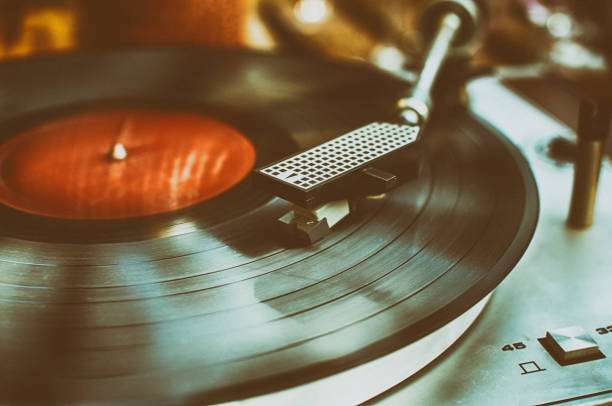
The imperfections of simulated sound actually make the music more realistic.
The advantage of digital music is its cleanliness, precision, and noise-free nature. However, precisely because of this excessive precision, many deliberately “corrected” sounds lose their emotional nuances.
Vinyl record players play analog signals:
It retains the slight vibration of the sound.
It will preserve the singer’s breathy ending notes.
It will preserve the airy feel between the instruments
It may even retain the slight friction sound of the stylus sliding across the surface.
These “flaws” are the lifeblood of music.
A common saying among vinyl enthusiasts is:
“Digital music is correct, but vinyl music is moving.”
Because vinyl records allow you to hear a natural, continuous, uninterrupted sound trajectory.
Just like warm, textured fabric, it’s always more comfortable than cold, smooth plastic.
The temperature chain formed by the stylus, record, and speaker
A vinyl record player does not come from a single component but rather from a chain reaction between the entire analog system.
1. The gentle friction from the stylus
The stylus is the most warm-hearted component; it’s responsible for “reading” sound.
Every contact, every rotation, is a process of the music being truly touched.
Those tiny vibrations create an “air vibration sensation” that digital music cannot replicate, which is often described as
“The sound is three-dimensional, as if it is floating in the air.”
2. The rotation of the record player is the “heartbeat” of the music.
The turntable rotates at a constant speed, serving as the rhythmic center of the entire playback system.
Its stable and gentle rotation infuses the music with a unique fluidity, like a heartbeat—slow and rhythmically distinct.
3. Warm sound coloration of analog audio systems
Digital music tends to sound colder the more you listen to it because it’s compressed too evenly.
However, analog vinyl records often produce a warmer sound, especially in the mid and low frequencies.
The human voice is thicker
Guitar is sweeter
The piano is more rounded
The drumbeats sounded more like “pounding on the air.”
This is the “golden filter” that vinyl players add to music.
The ritualistic aspect of vinyl records brings music back to the heart of life.
Listening to a vinyl record player is not as simple as just opening a playlist.
it takes:
Take out the record
Open the record
Wipe the surface
Put down the needle
Sit down and listen
In that brief minute, people are pulled away from the fast pace of digital life and enter a slower, more focused state.
Ritual itself is a form of warmth.
It wasn’t just something I listened to casually; it was something I “sat down specifically to listen to music.”
A vinyl record player forces you to quiet down and listen attentively, and that in itself is a kind of warmth.
You will silently feel that time flows slowly, thoughts can be soothed by sound, the soul will gradually quiet down with the spinning record, and music is not background noise but a real part of life.
Vinyl record player covers, designs, and collectibles make music tangible.
Digital music is virtual, intangible, and invisible.
Vinyl record player music, on the other hand, is an art form that can be held in your hands.
It includes:
Large-size cover design
Lyric book
Artistic Illustration
Limited edition number
Artist’s signature
The heavy record itself
When you pick up a vinyl record, flip through its inserts, and touch its texture, you’ll realize that
Music is not just sound but also a carrier of culture and emotion.
Many people say that vinyl records make music “warmer,” not only because of the sound, but also because of this tangible romance.
Each vinyl record has its own “personality.”
Digital music is uniform, standardized, and indistinguishable.
But vinyl records are different; each record has its own soul.
Some voices are thicker
Some instruments are more prominent
Some stylus friction sounds are more pronounced.
Some have deeper low frequencies
Some have skipped stitches due to the passage of time.
These differences are not flaws, but rather part of the story.
Just as different people have different expressions and emotions,
Listening to vinyl records is like having an intimate and unique dialogue with that record.
Vinyl records bring a slower pace of life and a revival of emotions.
In a fast-paced world, vinyl record players allow people to rediscover a forgotten rhythm: to slow down.
Many vinyl record users say:
“I’ll put a vinyl record on, and then I won’t use my phone at night.”
“When you listen to vinyl records, you feel calm.”
“Her voice is so warm it can bring tears to your eyes.”
“Vinyl records are not just for listening to music; they represent a lifestyle.”
Vinyl records transformed music from a functional tool into a companion for healing the soul.
Why does a vinyl record player make music feel warmer?
1. Analog audio retains the natural details of the sound, making it
more coherent, smoother, and more granular.
2. The mechanical structure brings a realistic tactile and vibration feel, with
the stylus, record, and speaker working together to deliver warmth.
3. A sense of ritual makes listening to music something to look forward to;
Slow down and focus on the music itself.
4. Vinyl records are tangible art;
Their covers, designs, and collectible value make music more emotional.
5. Each record is unique and bears the mark of time
It’s like a friend, not a data file.
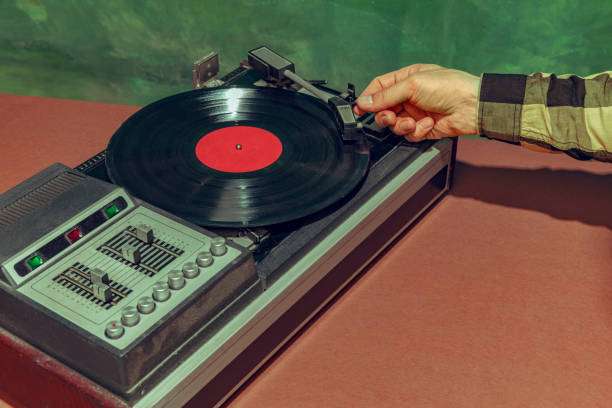
Conclusion:
In this era where everything can be compressed, digitized, and standardized, the vinyl record player reminds us that
Music should have emotion, texture, and a story.
Music should be warm.
Vinyl records won’t make life faster, but they can make it better.
As the needle falls and the melody begins, you’ll understand—
Music can be so real, so tender, so warm.
If you’re planning to buy a vinyl record player, you’re about to embark on a warmer auditory lifestyle.

